Home Blog Page 127

Huckleberry Pie

Huckleberry Pie

Huckleberry Pie is a quintessential Montana dessert, celebrating our state’s beloved wild huckleberries, which grow abundantly in our mountainous regions.

This user submitted recipe, is inspired by sources like The Taste of Montana, it delivers a sweet-tart, flaky-crusted pie that’s a perfect finale to a meal featuring dishes like Butte Pasties or Baked Trout.

If fresh huckleberries are unavailable, frozen ones work well.

Ingredients:

    • 2 cups Flour
    • 1 tsp. Salt
    • 2/3 cup Lard
    • 3 cups Huckleberries (fresh or frozen)
    • 1 cup Sugar

Directions:

    • Heat oven to 425°.
    • Pour huckleberries into medium bowl and toss sugar (6-8 tablespoons gently) until all berries are covered.
    • Set aside and make pastry.
    • In medium bowl mix 2 cups flour, salt and lard, using two knives or any other pastry blender.
    • I always do it with my fingers, squeezing the lard into the flour mixture until it’s all crumbled and looks like cornmeal. (Wash hands first)
    • Add about 8 tablespoons of ice water, tossing gently with a fork until it sticks together and can be rolled out. (Add more water to make it stick, a little at a time)
    • Roll out 1/2 of the dough on a floured, flat surface.
    • Place on bottom of pie pan and fill with huckleberry mixture.
    • Roll remaining dough and put on top of pie.
    • Deal the edges and crimp edges in decorative style.
    • Put fork pricks in the center for air to escape.
    • Bake for 45 to 50 minutes.
    • Let cool completely.

Note: This always leaks, no matter how carefully you try to crimp the edges, so if you don’t have an oven that cleans itself, put a lining of tinfoil under the pie to catch the spill.

J. Thomson
Bigfork Summer Playhouse


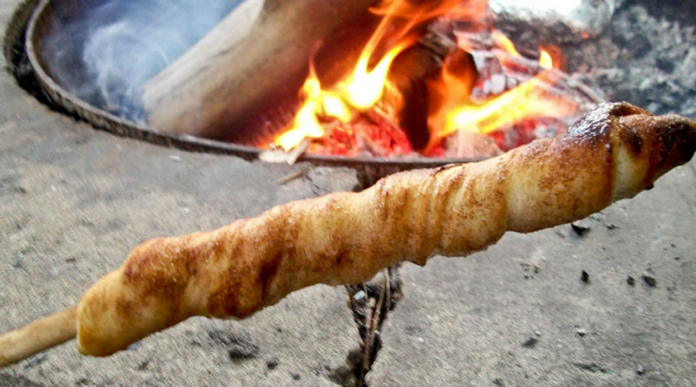
Bannock Bread or Indian Fry Bread

Bannock Bread

Bannock Bread is a simple, versatile flatbread with deep roots in Montana’s culinary history, often associated with Native American tribes, fur traders, and early settlers.

Traditionally cooked over an open fire, it’s a quick bread that’s perfect for camping or pairing with hearty dishes like venison or trout.

Ingredients:

    • 6 cups of Flour
    • 3 Tbs. Baking Powder
    • 1 1/2 tsp. Salt
    • 2 1/2 cups Water

Directions:

    • Heat oven to 350° Stir together; flour, baking powder and salt. Gradually add water, (if dough is too dry add more water).
    • Knead until dough is not sticky.
    • Grease a large baking pan, spread dough in pan and bake 35 minutes.

Serve hot with chokecherry jelly and thin sliced fried potatoes, beef from a roast, sliced thin before cooking and then fried.

Peppermint tea or coffee is usually served with Bannock Bread.

(can be fried stove top in a skillet as well)

“This is a traditional meal for our people.” – Earl Old Person, Chief (Chief of the Blackfeet Nation).


The Butte Pasty

Butte Pasty

The Butte Pasty is a Montana icon, a hearty, portable meat and vegetable pie brought to the copper mines of Butte by Cornish immigrants in the late 1800s.

Known as a “letter from ‘ome” by miners, this savory half-moon pastry was a practical, filling meal for workers, with a crimped edge serving as a handle to keep dirty hands from the food.

Below is a traditional Montana-style Butte Pasty recipe, inspired by sources like The Taste of Montana, Southwest Montana, and Butte’s Heritage Cookbook.

Ingredients:

Pastry:
    • 3 cups flour
    • 1/2 -1 tsp. Salt
    • 1 1/4 cups Lard or Shortening
    • 3/4 cup Very Cold Water
    • Measure Flour and Salt
    • Cut in lard until dough resembles small peas.
    • Add water and divide into 6 equal parts.
Filling:
    • 5 or 6 Medium Potatoes (red are best)
    • 3 Medium or 2 Large Yellow Onions
    • Parsley for Flavoring
    • 2 pounds of Meat (loin tip, skirting or flank steak)
    • Butter (to taste)
    • Salt and Pepper (to taste)

Directions:

    • Roll dough slightly oblong.
    • Slice in layers on dough, first the potatoes, then the onions and last the meat (sliced or diced in thin strips).
    • Bring pasty dough up from ends and crimp across the top.
    • Making the pasty oblong eliminates the lump of dough on each end.
    • Bake at 375° for about one hour.
    • Brush a little milk on top while baking.

The Butte pasty is deliberately simple, seasoned only with salt and pepper to reflect its humble mining roots. Cornish tradition emphasizes chopped (not minced) meat and sliced vegetables. Rutabaga is authentic, often mislabeled as turnip in old recipes.

Lard yields a more authentic texture, but butter works well. Some modern recipes use cream cheese for extra crust flakiness.

For a modern twist, try ground pork with beef or add carrots and cheese, though purists may object. Smaller “cocktail pasties” are great for gatherings.

You can wrap and refrigerate leftovers for up to 3 days or freeze for up to 3 months. Reheat at 350°F for 20-30 minutes (keep foil on if frozen).

Serve your Pasty up with a local brew like Kettle House’s Shady Hazy IPA for a true Butte experience.

The pasty, pronounced “PASS-tee,” became a Butte staple due to its portability and heartiness, fueling miners in the copper boom. Though Cornish in origin, it’s often called “Irish Butte Pasty” due to the city’s large Irish population.

The crimped edge allowed miners to hold the pasty without contaminating it, discarding the soiled crust.


Baked Trout in Wine Sauce

Baked Trout in Wine Sauce

Here’s a cool recipe for Baked Trout in Wine Sauce, inspired by recipes from sources like Montana Fish, Wildlife & Parks for a simple, flavorful dish that highlights trout’s delicate flavor with a light, elegant wine sauce. This preparation is perfect for a fresh catch or store-bought trout.

Ingredients:

    • 10 to 12″ trout (1 fish per serving)
    • Fresh Mushrooms or Canned
    • Onions (chopped)
    • Parsley (chopped)
    • Bread Crumbs
    • Seasoning *to taste (salt, pepper, thyme, and bay leaves)
    • Butter
    • White Wine

Directions:

    • Sauté fresh or canned mushrooms, onions, and parsley in butter.
    • Toss with breadcrumbs and seasoning (to suit own taste).
    • Stuff trout cavities.
    • Place in greased baking dish, place lemon slices on top (2 for each trout).
    • Melt butter in pan, add equal amount of white wine and 1/4 as much lemon juice.
    • Baste frequently with wine sauce.
    • Bake for 20 to 25 minutes in hot 400° oven.

This Baked Trout dish is light yet flavorful, with the wine sauce enhancing the trout’s natural taste.

If you’d like a grilled or pan-seared variation, or a specific wine pairing, let me know!


Pan-Fried Trout (for camp or kitchen)

Pan-Fried Trout (for camp or kitchen)

Here’s a submission for Pan-Fried Trout straight from the camp.

To prepare fresh brook or other pan-sized trout, clean and scale if necessary, soak in salted water for 1/2 hour to remove film from fish.

Rinse thoroughly and remove head (optional). Dry. Dip in beaten egg and roll in rich cracker crumbs sprinkled with seasoning salt.

Fry in hot fat.

When golden brown on one side, turn and brown on the other. Turn only once.

These are especially good, fresh caught, cooked over a campfire in a heavy skillet, using the grease from fried bacon strips.

Fire should be hot but not flaming so fish will not cook too fast or burn.

Cook your pan-fried trout only until they flake easily when tested.

Top with crisp bacon.

J. McGrath

Note: Here is a good accompaniment for pan-fried fish when not using bacon for frying.

Sauté chopped green onions with fresh or canned mushrooms in butter.

Add a little sherry or white wine and heat.

Do not boil.

Serve with fish for brunch, along with minted fresh fruit and blueberry muffins.


- Advertisement -