The Battle of the Seelow Heights (German: Schlacht um die Seelower Höhen) was a major engagement on the Eastern Front of World War II, fought from April 16 to 19, 1945 as the opening phase of the Soviet Berlin Strategic Offensive Operation (itself part of the broader Battle of Berlin). It was one of the last large-scale assaults on entrenched defensive positions of the war and is sometimes folded into the wider Battle of the Oder–Neisse.
The heights, a plateau rising roughly 100–200 feet above the Oderbruch floodplain east of Berlin (near the town of Seelow in Brandenburg, roughly 45–56 miles from the capital), controlled the most direct route into the city along the main highway (Reichsstraße 1). They were known as the “Gates of Berlin.”
Forces and Commanders
Soviets (and Polish allies):
Primarily the 1st Belorussian Front under Marshal Georgy Zhukov (with key subordinate roles for commanders such as Vasily Chuikov of the 8th Guards Army). Roughly 1,000,000 troops (including about 78,500 from the Polish 1st Army), supported by around 3,000 tanks/self-propelled guns and nearly 17,000–19,000 artillery pieces and mortars.
Massive overall Soviet superiority across the fronts involved (including Ivan Konev’s 1st Ukrainian Front to the south) totaled millions of men, thousands of tanks, and tens of thousands of guns.
Germans:
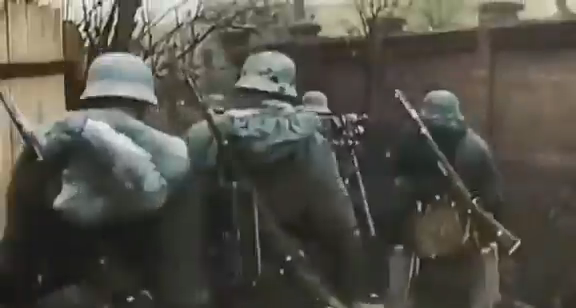
Mainly the 9th Army under General Theodor Busse, part of Army Group Vistula commanded by Colonel-General Gotthard Heinrici (who had recently replaced Heinrich Himmler). Approximately 110,000–112,000 men, with fewer than 600 tanks and about 2,600 guns (many understrength units, including Volkssturm militia).
Heinrici, an experienced defensive specialist, correctly anticipated the main Soviet thrust. He lightly screened the Oder riverbank, heavily fortified the heights, created three successive defensive lines (including the deeper Wotan Line), and flooded the already swampy Oderbruch plain by releasing reservoir water, turning it into a major obstacle of mud, canals, and soft ground.
The Battle
The offensive opened in the early hours of April 16 with one of the largest artillery barrages of the war: some 9,000 Soviet guns and Katyusha rocket launchers fired hundreds of thousands of shells (reports cite around 500,000 in the first 30 minutes). German troops had largely withdrawn from the forward positions, so the bombardment was less effective than hoped; dust and smoke also reduced the usefulness of Soviet searchlights intended to illuminate the advance and blind defenders.
Soviet infantry and armor struggled across the flooded, obstructed valley under German fire from the heights. Progress was slow and costly. Frustrated, Zhukov committed his tank army reserves earlier than planned (causing traffic jams and command confusion with forward units). By the end of the first day, advances were limited (typically just a few miles in most sectors), and the second German line held.
Fighting continued intensely on April 17-18. The Soviets ground forward, breaking the second defensive line and beginning to bypass the heights from the north while facing counterattacks (including from SS formations). Konev’s successful advance farther south against weaker defenses unhinged the overall German position and added pressure. By the night of April 18 the Soviets had reached the third and final main defensive line.
On April 19 the last major German positions on the heights were broken. The road to Berlin lay open; organized resistance east of the city largely collapsed into pockets. Remnants of the German 9th Army were subsequently encircled (leading to the destructive Battle of Halbe).
Casualties and Outcome
Casualty figures vary by source. Soviet losses for the 1st Belorussian Front in the fighting are estimated by Russian historian Aleksey Isaev (using archival data) at around 20,000 total (including 5,000–6,000 killed and missing); Western historians such as Antony Beevor and Max Hastings cite roughly 30,000 killed. German killed are commonly estimated around 12,000. Significant Soviet armored losses also occurred (hundreds of tanks).
The battle was a clear Soviet victory. It eliminated the last major prepared German defensive barrier before Berlin, enabled the rapid encirclement of the city (completed around April 23-25), and contributed to the fall of Berlin in early May 1945. Zhukov faced postwar criticism for the high cost of the direct assault (some argued for greater use of flanking options via Konev’s sector), though the main thrust also aimed to link up with other fronts and cut off the 9th Army.
A Soviet war memorial stands on the Seelow Heights today, and the site is a recognized battlefield with preserved elements and visitor access. The engagement remains notable for the scale of the artillery preparation, the difficult terrain that amplified German defensive advantages despite overwhelming Soviet numerical superiority, and its role as the immediate prelude to the final battle for the German capital.