Here’s a video of a huge herd of Elk in West Loveland, Colorado. Listen close, you can hear the cows talking to the bulls!
#ThanksgivingTravel
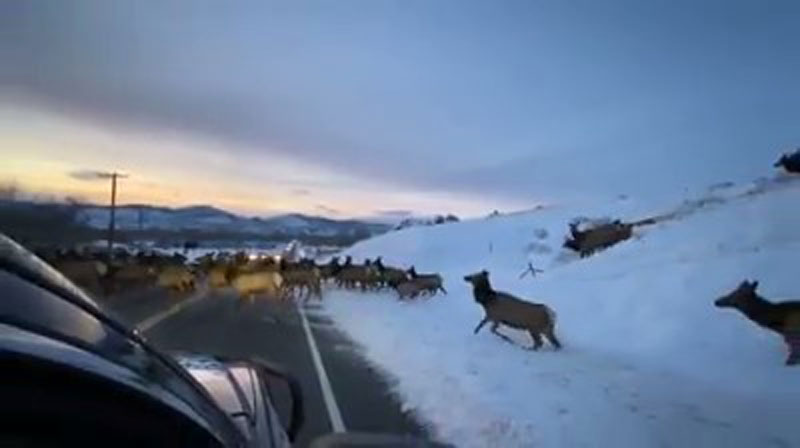
Elk migrate seasonally between higher elevations in the spring and summer and lower elevations in the fall and winter to find accessible food and avoid deep snow.
This migration is prompted mainly by environmental cues, with snowmelt and the “green-up” of nutritious vegetation signaling elk to move upward into summer ranges, while the first snows and colder temperatures cue their return to valleys and plains for the winter.
Migration Patterns
-
- Snow depth: Deep snow makes food inaccessible, prompting elk to move to areas with lighter snow.
- Vegetation: They follow the wave of green vegetation, seeking nutritious plants at changing elevations.
- Weather cues: Timing can vary yearly based on weather, snowpack, and food availability, allowing elk to adapt flexibly.
- Predator pressure: Large herds migrating together help protect individuals from predators like wolves during the journey.
Migration Routes
In regions like the Greater Yellowstone Ecosystem, migration routes have been mapped extensively, with distinct corridors used year after year by major herds.
Similar patterns are seen in Nevada and Colorado, where they travel between mountain ranges and valleys depending on season and habitat conditions.
Elk migration remains one of the most significant wildlife phenomena in North America, vital for herd survival and ecosystem balance.