
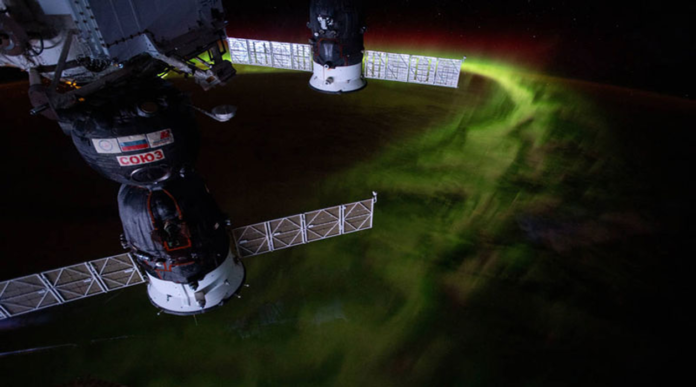
NASA has approved two heliophysics missions to explore the Sun and the system that drives space weather near Earth. Together, NASA’s contribution to the Extreme Ultraviolet High-Throughput Spectroscopic Telescope Epsilon Mission, or EUVST, and the Electrojet Zeeman Imaging Explorer, or EZIE, will help us understand the Sun and Earth as an interconnected system.
Understanding the physics that drive the solar wind and solar explosions — including solar flares and coronal mass ejections — could one day help scientists predict these events, which can impact human technology and explorers in space.
The Japan Aerospace Exploration Agency (JAXA) leads the Extreme Ultraviolet High-Throughput Spectroscopic Telescope (EUVST) Epsilon Mission (Solar-C EUVST Mission), along with other international partners. Targeted for launch in 2026, EUVST is a solar telescope that will study how the solar atmosphere releases solar wind and drives eruptions of solar material. These phenomena propagate out from the Sun and influence the space radiation environment throughout the solar system. NASA’s hardware contributions to the mission include an intensified UV detector and support electronics, spectrograph components, a guide telescope, software, and a slit-jaw imaging system to provide context for the spectrographic measurement. The budget for NASA contributions to EUVST is $55 million. The principal investigator for the NASA contribution to EUVST is Harry Warren at the U.S. Naval Research Laboratory in Washington.
The Electrojet Zeeman Imaging Explorer (EZIE) will study electric currents in Earth’s atmosphere linking aurora to the Earth’s magnetosphere – one piece of Earth’s complicated space weather system, which responds to solar activity and other factors. The Auroral Electrojet (AE) index is a common measure of geomagnetic activity levels, even though the details of the structure of these currents is not understood. EZIE will launch no earlier than June 2024. The total budget for the EZIE mission is $53.3 million. The principal investigator for the mission is Jeng-Hwa (Sam) Yee at the Johns Hopkins University Applied Physics Laboratory in Laurel, Maryland.
“We are very pleased to add these new missions to the growing fleet of satellites that are studying our Sun-Earth system using an amazing array of unprecedented observational tools,” said Thomas Zurbuchen, associate administrator for science at NASA Headquarters in Washington. “In addition to my enthusiasm at selecting a pioneering multi-point observatory focused on the auroral electrojets, I am particularly excited to follow up the success of the Yohkoh and Hinode solar science missions with another international collaboration with JAXA and other European partners on EUVST.”
The EUVST mission addresses the recommendations of a July 2017 final report delivered by the multi-agency Next Generation Solar Physics Mission Science Objectives Team. EUVST will take comprehensive UV spectroscopy measurements of the solar atmosphere at the highest level of detail to date, which will allow scientists to tease out how different magnetic and plasma processes drive coronal heating and energy release.
“We’re excited to work with our international partners to answer some of our fundamental questions about the Sun,” said Nicky Fox, Heliophysics Division director at NASA Headquarters in Washington. “EUVST’s observations will complement our current missions to give us new insight into our star.”
EZIE is an investigation comprising a trio of CubeSats that will study the source of and changes in the auroral electrojet, an electric current circling through Earth’s atmosphere around 60-90 miles above the surface and extending into the Earth’s magnetosphere. The interaction of the magnetosphere and the solar wind compresses the Sun-facing side of the magnetosphere and drags out the night-time side of the magnetosphere into what is called a “magnetotail.” Auroral electrojets are generated by changes in the structure of the magnetotail. The same space weather phenomena that power the beautiful aurora can cause interference with radio and communication signals and utility grids on Earth’s surface, and damage to spacecraft in orbit.
“With these new missions, we’re expanding how we study the Sun, space, and Earth as an interconnected system,” said Peg Luce, deputy director of the Heliophysics Division at NASA Headquarters in Washington. “EZIE’s use of instrument technology proven on Earth science CubeSat missions is just one example of how science and technology development at NASA go hand in hand across disciplines.”
Funding for these missions of opportunity comes from the Heliophysics Explorers Program, managed by the Explorers Program Office at NASA’s Goddard Space Flight Center in Greenbelt, Maryland.
For more information about NASA’s Heliophysics Division, visit:
For more information about Heliophysics missions of opportunity, visit:
https://explorers.gsfc.nasa.gov/missions.html
photo courtesy NASA











Should You Tip for Bad Service?
Should You Tip for Bad Service? By now, the workers at the La Fisherman restaurant in Houston, Texas are probably wishing they would have just let the whole thing go. But they didn’t, and now the story has been splattered all across the internet.
In case you missed it, a family went into the establishment for dinner and decided that the service they received was not worthy of the required 17% tip for parties over five. When Jasmine Marks informed the waiter that she wasn’t going to pay the gratuity, the staff responded by locking the doors and calling the police.
Is it illegal not to tip?
Marks wanted to know if it was against the law not to tip, but when the HPD arrived, even they didn’t know what to do.
In the end, Marks took the high road and paid the bill, gratuity included, just to end the stand-off.
Obviously, the folks of La Fisherman forgot that we’re living in a world of immediate and widespread news — thank you very much internet!
Regardless of who’s in the wrong, this couldn’t have been a positive PR move for the headstrong restaurant.
Rewarding bad service is a bad idea
Personally, it’s hard not to side with the consumer here. If you’re going to assume that a mandatory, predetermined tip amount is necessary, then you better make sure your service is up to that expectation.
Marks claims the wait staff messed up their orders and were rude in the process. So fine, losing track of what someone ordered is one thing , but the rudeness needs to be addressed, and most certainly shouldn’t be rewarded.
The opposition will claim that a business has the right to enforce it’s own policies, and if you don’t like it, eat somewhere else — but is that really the point?
What’s the point of tipping?
Tipping used to be defined as a social custom, and voluntary, depending on how you felt about the service provided to you.
I understand that in the present economy, those working in the customer service business are feeling the same strains that we all are feeling, and most likely, many waiters and waitresses are working for far less than they should.
The flip side is, consumers are more careful with spending, and less likely to pay for something they don’t feel is deserving of their hard earned money.
So what about the cops?
Well, although the law was unclear in Houston, the Bethlehem Township police department in Pennsylvania had a different interpretation of the law in 2006 when they arrested a couple for denying a mandatory tip due to their dissatisfaction in service.
What was the charge?
The charge was theft, but eventually the case would be dropped by the police department, but the young couple still got to experience being handcuffed and booked for their trouble.
Should there be a price to pay in the form of a tip, even for bad service?
Feel free to sound off in the comments below.