
Billionaire Arthur Blank (Home Depot co-founder and Atlanta Falcons owner) has debuted Auster at Dome Mountain, a new luxury lodge/resort in Paradise Valley.
This recent development fits the pattern of high-net-worth individuals, like other billionaires expanding hospitality or private properties in the state. Blank has assembled a large portfolio in the area over roughly 25 years — now totaling more than 33,000 acres across properties including Mountain Sky Guest Ranch (which he bought in 2001), West Creek Ranch, Paradise Valley Ranch, and now the new Auster site.
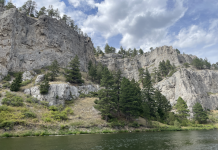
Auster sits on more than 6,000 acres beneath Emigrant Peak and the Absaroka Range, with about four miles of Yellowstone River frontage. It features 20 one-to-three-bedroom cabins designed for year-round stays, a main lodge with Southwind Kitchen and Saloon (including a rooftop deck), a pool, guided activities (hikes, horseback riding), and access to the Johnny Miller-designed Rising Sun Golf Course at the nearby Mountain Sky property. Construction largely stayed within an existing 1960s guest-facility footprint. Rates are in the premium range (reports mention around $1,000 a night in some coverage).
Blank has emphasized conservation easements on parts of his holdings (for example, thousands of acres protected via the Gallatin Valley Land Trust) alongside ranching, recreation, and philanthropy through the Arthur M. Blank Family Foundation and related Montana giving.
Montana has seen a series of similar projects and purchases by wealthy individuals and firms. Examples include the long-established Yellowstone Club (private ski/golf community near Big Sky with many high-net-worth members), Discovery Land Company developments such as Crazy Mountain Ranch (private membership ranch/golf experience on former Marlboro Ranch land) and the proposed Territory 1889 / Flathead Lake Club near Lakeside (1,700-acre members-only project with golf, residences, and marina that has drawn local opposition), plus other luxury offerings around Big Sky like Montage Big Sky and One and Only Moonlight Basin.
Recent local commentary often frames these as part of a broader trend, raising questions about housing costs, public access, water use, community character, and how much of the state’s iconic landscapes become exclusive retreats. Proponents point to economic activity, conservation efforts, and tourism benefits. Paradise Valley’s dramatic river-and-mountain setting is a major draw for these projects.
High-end development increases costs for everyone
Montana experienced sharp housing price increases starting around 2020. Statewide home values rose about 50% from early 2020 to mid-2022 (faster than the national average in that period), and in some metrics prices roughly doubled from spring 2020 levels in the following years.
More recent figures (late 2025–mid-2026) show medians around $530,000–$550,000 statewide, with some stabilization or modest year-over-year declines in places, though levels remain elevated. In high-demand areas the picture is more acute:
-
- Gallatin County (Bozeman/Big Sky area) medians have often been in the $687,000–$800,000 range recently.
- Bozeman-area figures frequently show $700,000–$790,000+ for single-family homes or overall medians depending on the exact period and data source.
Affordability metrics have been among the worst in the U.S. by price-to-income ratios at various points (sometimes ranking least affordable), as median household incomes lag (roughly $72,000–$75,000 in recent data). Many renters face cost burdens exceeding 30% of income.
Overall cost-of-living indexes place Montana near or somewhat above the national average in recent readings (e.g., composite indices around 95–106, with housing often 20–28% above national averages while other categories like utilities can be lower). Housing is the primary pressure point for many residents.
How much does a Billionaire cost?
Concentrated demand from higher-income migrants (including from coastal states), remote workers, retirees, and second-home/vacation buyers has bid up prices, particularly in places like Big Sky, Paradise Valley, the Flathead Valley, and around Bozeman.
Luxury resorts, private clubs (e.g., Yellowstone Club and related Discovery Land Company projects), and high-end lodge/ranch developments amplify this in specific locales by competing for land, drawing more affluent visitors/residents, and supporting a service economy where worker wages often do not keep pace with local housing costs.
High vacancy rates from seasonal/second homes reduce available stock for year-round residents and workers. This contributes to workforce housing shortages in resort areas. Montana has responded with property tax changes that raise rates on second homes and short-term rentals while providing relief for primary residences, explicitly aimed at shifting burdens after out-of-state purchases drove up prices and taxes for locals.
Broader factors include limited housing supply relative to demand (geographic constraints, construction costs, zoning, and slower building during the migration surge), national post-pandemic trends, and amenity-driven appeal of the Mountain West. Population growth surged then slowed (partly because high costs deterred further in-migration).
Economic Trade-offs Favor the Wealthy
Tourism and outdoor recreation (bolstered by these developments) generate substantial activity — nonresident visitor spending has been in the $5+ billion range annually in recent years, supporting tens of thousands of very low paying jobs and hundreds of millions in tax revenue that many claim can ease burdens on residents. Some billionaire owners (e.g., philanthropic efforts tied to large ranch holdings) may emphasize conservation easements but do nothing to help conserve affordable living arrangement for Montana locals.
The distributional effects are uneven: service and hospitality jobs can be seasonal or lower-wage relative to elevated local costs, and long-time residents or lower/middle-income workers face greater pressure on housing, property taxes, and everyday expenses in many areas of our state.
In short, billionaire-backed and luxury ventures raise local costs mainly via the housing channel in many of Montana’s desirable regions, exacerbating affordability challenges for many Montanans. Statewide effects are real and may vary somewhat by location but not by much. Over all, these trends are having ripple effects across the state and are not just being experienced in these so-called hot spots.





 has debuted Auster at Dome Mountain, a new luxury lodge)