Petrichor is the distinctive earthy, usually pleasant scent produced when rain falls on dry soil or rock, especially after a warm, dry spell.
The term was coined in 1964 by Australian researchers Isabel Joy Bear and Richard Grenfell Thomas in a paper published in Nature. They formed it from the Greek words petra (or petros, meaning “stone”) and ichor (the ethereal fluid said to flow in the veins of the gods in classical mythology), describing it as a “tenuous essence” derived from rock or stone. Previously, the smell had sometimes been called an “argillaceous odour.”
What causes it
The scent arises mainly from a mix of compounds that build up or are present in dry soil and get released into the air by rain:
-
- Volatile plant oils that accumulate on and in soil and rocks during dry periods.
- Geosmin, an organic compound (a bicyclic alcohol) produced by soil-dwelling actinobacteria, particularly Streptomyces species, as they break down organic matter. Geosmin is a major contributor to the characteristic earthy note; humans are extremely sensitive to it.
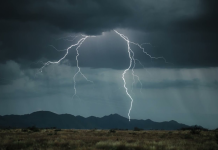
- In some cases, ozone carried down by storm downdrafts (especially with lightning), which can add a sharper, cleaner element.
When raindrops strike porous dry soil, they trap tiny air bubbles that rise and burst, creating aerosols that loft these scent compounds (along with some microbial material) into the air. This effect is often strongest with lighter rain after prolonged dry weather.
In short, petrichor is the smell of rain hitting thirsty earth — a combination of plant-derived oils, bacterial geosmin, and the physics of raindrop impact. It’s widely regarded as one of the most pleasant and evocative natural scents.